How to Buy Beef (ChatGPT)
I hope you can help me out. I’m at US foods chef store and I’m trying to find the best cut of beef that I can cut into steaks. Do you have any recommendations what I should look for and be able to determine if I were to ask you or send you a picture is this a good value when you look at the weight divided by the number of ounces? Would you be able to help me?
Yes — I can absolutely help you with this (and honestly this is a great way to save money and get better steaks).
If you send me a picture of what you’re looking at, I can:
- Tell you if it’s a good cut
- Estimate how many steaks you’ll get
- Help you calculate price per steak / per ounce
- Tell you if it’s a good value or not
🥩 What you should look for (at US Foods Chef Store)
Best whole cuts to turn into steaks
These are your go-to options:
1. Ribeye (Rib Roast / Whole Ribeye)
6
- Best flavor + tenderness
- Tons of marbling (fat) = juicy steaks
- You’ll cut into classic ribeye steaks
- Usually more expensive, but worth it
👉 Comes from the rib section, known for tenderness and rich marbling
2. Strip Loin (NY Strip Roast)
7
- Great balance of tender + beefy flavor
- Leaner than ribeye but still good
- Easy to cut into uniform steaks
👉 Known for balanced texture and moderate marbling
3. Top Sirloin (Sirloin Butt)
5
- Best value (cheaper)
- Leaner, slightly less tender
- Still very flavorful
👉 Sirloin is less tender but very versatile and cost-effective
⚠️ Cuts to avoid (for steak cutting)
- Chuck roast (unless you really know how to break it down)
- Round cuts (too tough)
- Brisket (not for steaks)
👉 Those come from heavily used muscles → tougher meat
🔍 How to spot a GOOD piece (this is key)
When you’re standing there looking at meat, check:
1. Marbling (MOST IMPORTANT)
- Look for thin white streaks throughout
- More marbling = more flavor + tenderness
👉 Well-marbled cuts produce the best steaks
2. Thickness of the whole cut
- Bigger = more steaks
- A strip loin can give ~10–14 steaks depending on size
3. Fat cap
- A nice fat layer on top = flavor + protection when cooking
4. Price per pound
Here’s how to think about value:
👉 Good deal ranges (rough guide):
- Ribeye roast → $$$ (highest, but premium)
- Strip loin → $$ (great middle ground)
- Sirloin → $ (best budget)
💰 How to calculate if it's a good deal (super simple)
When you see a package:
- Look at total weight (lbs)
- Look at price per lb
- Estimate steaks:
- 1 lb ≈ 2 steaks (if ~8 oz each)
👉 Example:
- 10 lb strip loin = ~20 steaks
- If total = 6 per steak → GREAT deal
🧠 Pro tip (this is what pros do)
A lot of people buy whole ribeye or strip loin because:
“It’s about 2/3 the price and you cut your own steaks.”
👍 What I recommend for YOU right now
Since you're in the store:
- If you want best quality → get ribeye roast
- If you want best balance → get strip loin
- If you want budget → get top sirloin
📸 Next step (I’ll help you live)
Send me:
- A picture of the meat
- The price + weight
I’ll break it down like:
- “Yes buy this” or “skip it”
- Cost per steak
- How many steaks you’ll get
- Whether it’s actually a deal
You’re doing this exactly right 👍
Is this good? Should I buy this?
Short answer: YES — this is a solid buy 👍 (with one small caveat).
Let me break it down like a pro standing next to you in the store:
🥩 What you’re looking at
- Cut: Top Sirloin (Angus, boneless)
- Price: 7.39/lb bulk)
- Weight (sign shows): ~15 lb
💰 Is this a good price?
👉 Yes — this is actually a GOOD deal
Here’s why:
- Average sirloin price right now ≈ 16/lb
- Grocery sales often land around 12/lb
👉 You’re at 7.39 bulk) =
✔️ Lower end of sale pricing
✔️ Very competitive for Angus
🔍 Quality check (from your photo)
👍 Good signs:
- Nice fat cap on top (flavor + moisture)
- Large whole muscle = perfect for slicing steaks
- Color looks fresh (deep red, not gray)
⚠️ Watch this:
- Marbling is moderate (not heavy)
→ This is normal for sirloin
→ Just know:- Not as juicy as ribeye
- Still very good if cooked right
🔪 What you’ll get out of this
If that’s a ~15 lb piece:
- Trim loss: ~10–15%
- Usable meat: ~13 lbs
👉 If you cut:
- 10 oz steaks → ~20–21 steaks
- 12 oz steaks → ~17–18 steaks
💵 Cost per steak (this is where you win)
Let’s say:
- You pay ~7.39–$8.09/lb)
👉 That gives you:
- ~6 per steak
🔥 That is VERY GOOD value
🧠 Honest recommendation (no fluff)
Buy it IF:
- You want value + quantity
- You’re okay with slightly leaner steaks
- You’ll grill, pan-sear, or marinate
Skip it IF:
- You want super tender, steakhouse-level ribeye
- You see a strip loin or ribeye at similar price (rare, but worth checking)
🥇 My verdict for YOU
👉 YES — I would buy this
👉 Especially at the $7.39/lb tier
This is exactly how people stock their freezer with steaks for cheap.
🔥 Quick pro tip (important)
When you cook these:
- Salt them ahead of time (dry brine)
- Cook to medium-rare
- Slice against the grain
👉 That turns a “good” sirloin into a GREAT steak
If you see a ribeye or strip loin nearby, snap a pic — I’ll help you compare before you commit.
What kind of knife should I use to cut this meat up?
Great question — this is where most people either make this easy… or way harder than it needs to be.
You’re cutting a large top sirloin, so you want a knife that can:
- Slice clean through muscle
- Handle fat easily
- Give you control when portioning steaks
🔪 Best overall (what I’d use)
Breaking / Butcher Knife (THIS is the one)
Victorinox 10" Breaking Knife Fibrox Handle
$64.99•The Bearded Butchers
$64.99•The Bearded Butchers
👉 This is what pros use for exactly what you’re doing.
Why it’s best:
- Long blade = smooth, clean cuts (not sawing)
- Slight curve = glides through meat
- Designed for breaking down large cuts into steaks
💡 This will make your life WAY easier than a regular kitchen knife.
👍 Second option (if you already have something at home)
Chef’s Knife (8–10 inch)
- Works fine if it’s sharp
- Just a little shorter → more strokes to cut through
👉 If you have a good chef’s knife, you can absolutely use it.
🔍 For trimming only (not your main knife)
Boning Knife
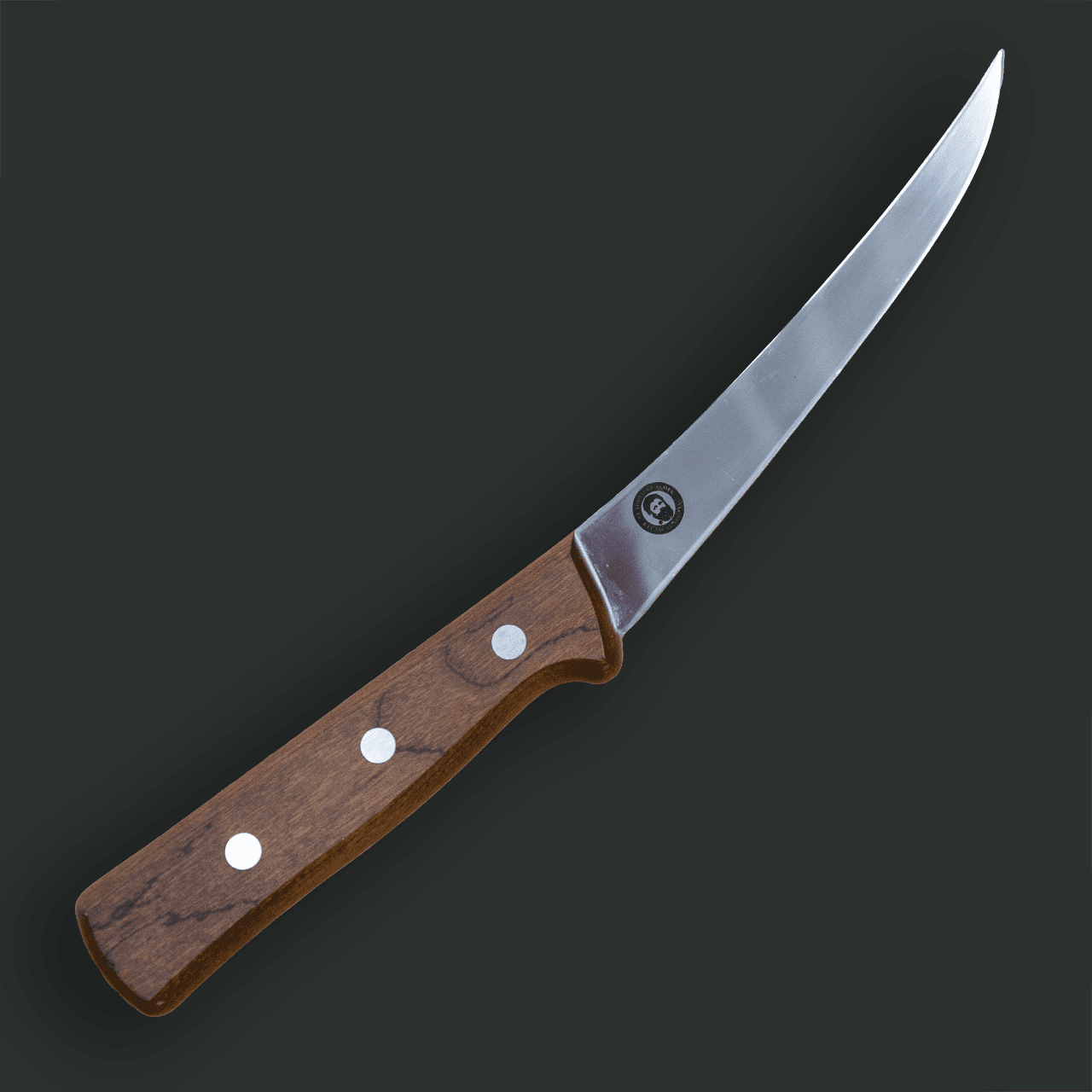
Victorinox 6" Boning Knife Wood Handle · $48.99
Great for trimming fat and detail work but not ideal for cutting full steaks.
Use this for:
- Trimming fat
- Cleaning up edges
NOT for:
- Cutting full steaks (too small)
🧠 Simple way to think about it
- Breaking knife = slicing steaks ✅
- Chef’s knife = okay backup 👍
- Boning knife = detail work only ✂️
⚠️ What NOT to use
- Serrated knife (bread knife) ❌
- Dull knife ❌ (this will ruin your steaks)
- Small paring knife ❌
🔥 Pro tip (this matters more than the knife)
- Put the meat in the fridge for a bit → slightly firm = easier cuts
- Use long smooth strokes (don’t saw)
- Cut 1–1.25 inch thick steaks
👍 My honest recommendation for YOU
If you plan to do this more than once:
👉 Get the breaking knife — it’ll pay for itself immediately
If this is just a one-time thing:
👉 Use your sharpest chef’s knife
If you want, I can walk you through exactly:
👉 where to cut
👉 how thick
👉 how to spot the grain
Just send me a pic when you get it home and I’ll guide you step-by-step 👍
Where can I buy a butchers knife in which one do you recommend? Is there one that America’s test kitchen recommends?
You’re asking exactly the right question — because the knife you choose will make or break this whole experience.
Let me give you a straight, no-BS answer:
🥇 Best overall (and YES — this is very close to what pros + test kitchens recommend)
Victorinox Fibrox 10" Breaking Knife
$64.00•Best Kitchen Knives
$64.00•Best Kitchen Knives
👉 This is the one I would tell you to buy without hesitation.
Why this is the move:
- Long curved blade = clean steak cuts (no sawing)
- Fibrox handle = non-slip, easy to control
- Used by butchers + restaurant kitchens everywhere
- Affordable for what it does (~$60 range)
💡 This style (Victorinox Fibrox line) is widely recommended by serious testers and kitchen pros because it balances performance + price + durability extremely well.
🥩 Other solid options (same family)
Budget / smaller option
Victorinox Fibrox 8" Breaking Knife · $56.00
Slightly shorter version that’s easier to handle if you want more control.
👉 Better if you feel nervous with a long blade
Slight upgrade (same performance, nicer handle)
Victorinox Rosewood 10" Breaking Knife · $79.99
Same cutting performance with a premium wood handle for a more traditional feel.
👉 Looks nicer, same cutting ability
📊 Quick comparison (so you pick confidently)
| Attribute | Victorinox Fibrox 10" Breaking Knife $64.00•Best Kitchen Knives | Victorinox Fibrox 8" Breaking Knife $56.00•Best Kitchen Knives | Victorinox Rosewood 10" Breaking Knife $79.99•PERFECT EDGE CUTLERY |
|---|---|---|---|
| Blade length | 10" | 8" | 10" |
| Ease for big cuts | ⭐⭐⭐⭐⭐ | ⭐⭐⭐ | ⭐⭐⭐⭐⭐ |
| Control | ⭐⭐⭐⭐ | ⭐⭐⭐⭐⭐ | ⭐⭐⭐⭐ |
| Handle | Non-slip Fibrox | Non-slip Fibrox | Wood (premium feel) |
| Best for | Large roasts / steaks | Smaller hands / control | Same as Fibrox, nicer grip |
🛒 Where to buy (easy options)
You can find these at:
- Amazon
- Restaurant supply stores (like where you are now sometimes)
- Knife shops / butcher supply stores
- Online knife retailers (Swiss Knife Shop, etc.)
👉 If your Chef Store doesn’t carry it, Amazon will have it immediately.
🧠 What America’s Test Kitchen would say (translated simply)
While they test more chef’s knives than butcher knives, their consistent advice is:
- Go with Victorinox Fibrox line
- Prioritize grip + sharpness + control over fancy looks
- Don’t overspend — performance matters more than brand hype
👉 That’s exactly why this knife keeps showing up everywhere.
🔥 My honest recommendation for YOU
Since you’re cutting that sirloin:
👉 Get the 10" Fibrox breaking knife
- It’ll make slicing steaks EASY
- You’ll get clean, professional-looking cuts
- It’s the best balance of price + performance
If you want, when you get home:
👉 send me a pic of the meat on your counter
I’ll literally walk you through exactly where to cut and how thick step-by-step.
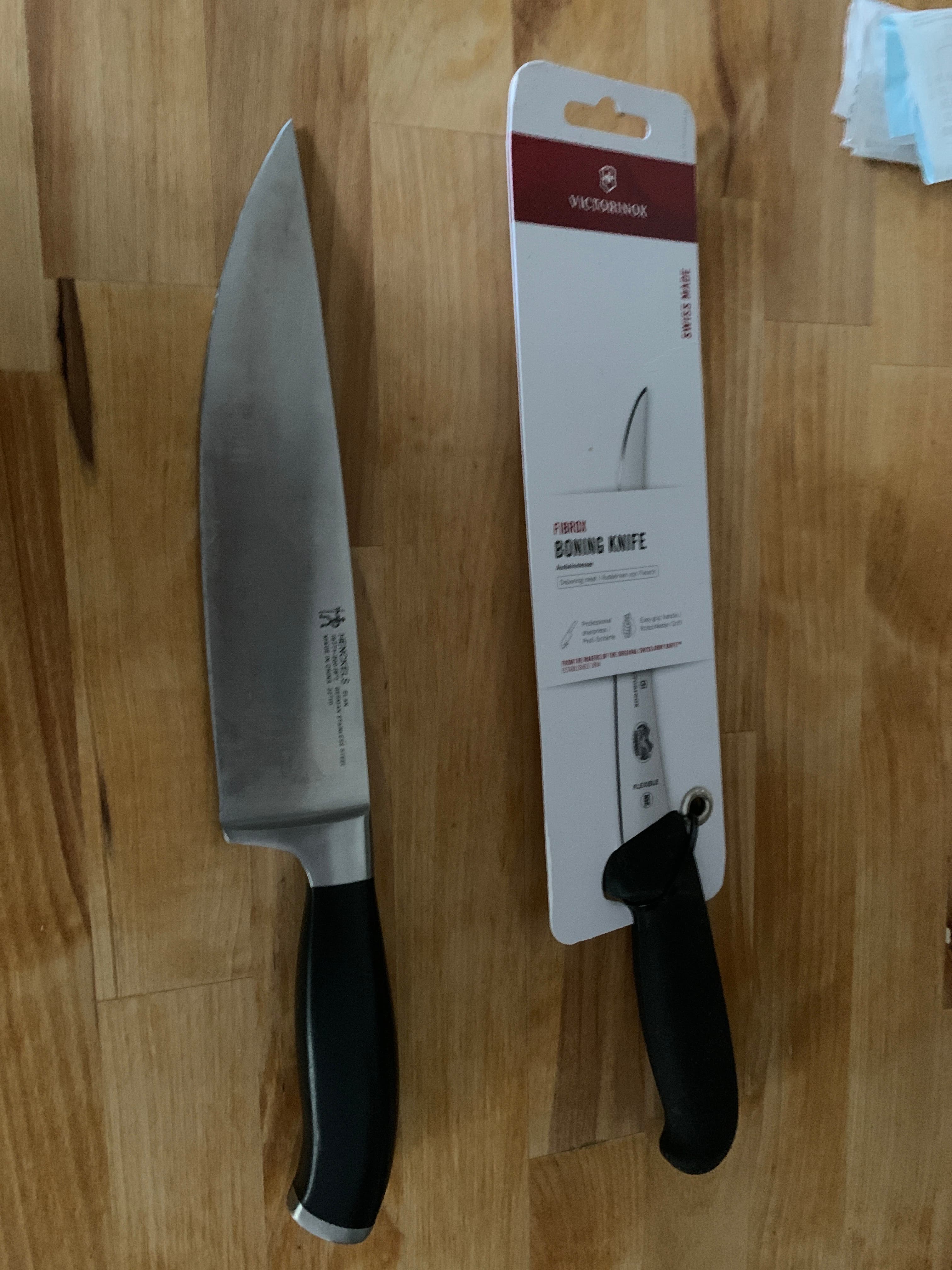
Well, both these knives work I think I have a chef’s knife and I definitely have a boning knife. Will this do the job?
Short answer: YES — you are 100% good to go with what you already have 👍
Let me walk you through this clearly based on your photo:
🔍 What you have (and how to use it)
1. Chef’s Knife (left)
👉 This will do MOST of the work
- Use this to:
- Slice steaks
- Portion the sirloin into sections
- It’s long enough and sturdy enough
✅ This is your main knife
2. Boning Knife (right)
👉 This is your detail tool
- Use this to:
- Trim fat
- Remove silver skin
- Clean up edges
❌ Not ideal for cutting full steaks (too small)
🧠 Honest truth (no upsell)
You do NOT need to buy anything else right now
A proper breaking knife like this:
Victorinox Fibrox Pro 10" Breaking Knife · $64.00
Professional butcher knife designed for breaking down large cuts into steaks with smooth, single-pass slicing.
…is easier and faster, but:
👉 What you have = completely capable
👉 Just requires slightly more effort
🔪 How to use what you have (this matters more than the knife)
Step-by-step:
- Use the chef’s knife
- Make long, smooth slices (don’t saw back and forth)
- Cut steaks about:
- 1 to 1.25 inches thick
- Use the boning knife after to:
- Trim fat
- Clean edges
🔥 Pro tips (this will make a BIG difference)
- Chill the meat for 20–30 minutes → easier to cut
- Wipe your knife between cuts → cleaner steaks
- Look for the grain direction and cut across it
🥇 My recommendation for YOU
👉 Use what you have today — you’re good
If you end up loving this process and want to upgrade later:
- Then get a breaking knife
But right now:
👉 Don’t spend money — you’re fully equipped already
If you want next step help:
👉 Send me a pic of the meat on your counter
I’ll literally mark where to cut and how to portion it so you don’t waste anything 👍
Can I use this cut out of meat and be able to grind it as ground beef in my food processor?
Yes — you absolutely can grind that top sirloin into ground beef in your food processor 👍
…and it’s actually a great way to control quality.
That said, there are a couple of important tweaks to make it come out juicy instead of dry.
🥩 Will top sirloin work for ground beef?
Yes — but it’s lean
- Sirloin is typically ~90–93% lean
- Store ground beef is usually 80/20 or 85/15
👉 So:
- ✔️ Clean, beefy flavor
- ❗ Can be a little dry if you don’t add fat
🔥 Best way to do it (food processor method)
1. Cut into chunks
- Use your chef’s knife
- Cut into 1–1.5 inch cubes
2. VERY IMPORTANT — chill it
- Put meat in freezer for 15–25 minutes
- You want it:
- Firm
- Not frozen solid
👉 This is the #1 trick for good texture
3. Pulse (don’t blend!)
- Work in small batches
- Pulse 8–12 times
👉 You want:
- Crumbly texture
- NOT paste
🧠 How to make it better (this is the pro move)
Add fat (highly recommended)
If you can grab some:
- Beef fat (best)
- Or even:
- Bacon
- Fatty trimmings
👉 Aim for:
- 80/20 blend (ideal for burgers)
Simple ratio:
- 1 lb sirloin
-
- 2–3 oz fat
🍔 What this is PERFECT for
- Burgers
- Tacos
- Meat sauce
- Meatballs
⚠️ What to avoid
- Don’t over-process → turns mushy
- Don’t use warm meat → bad texture
- Don’t skip fat if you want juicy burgers
🥇 My honest recommendation for YOU
👉 Yes, use some of that sirloin for grinding
👉 But keep most for steaks (that’s where it shines)
If you do both:
- You get steaks + fresh ground beef
- Way better than store-bought
If you want, I can help you:
👉 Decide how much to keep for steaks vs grind
👉 Or give you a killer burger mix recipe from what you bought
